
Health
Deputies and Crisis Negotiators Safely Resolve Mental Health Crisis Outside Hennepin Healthcare

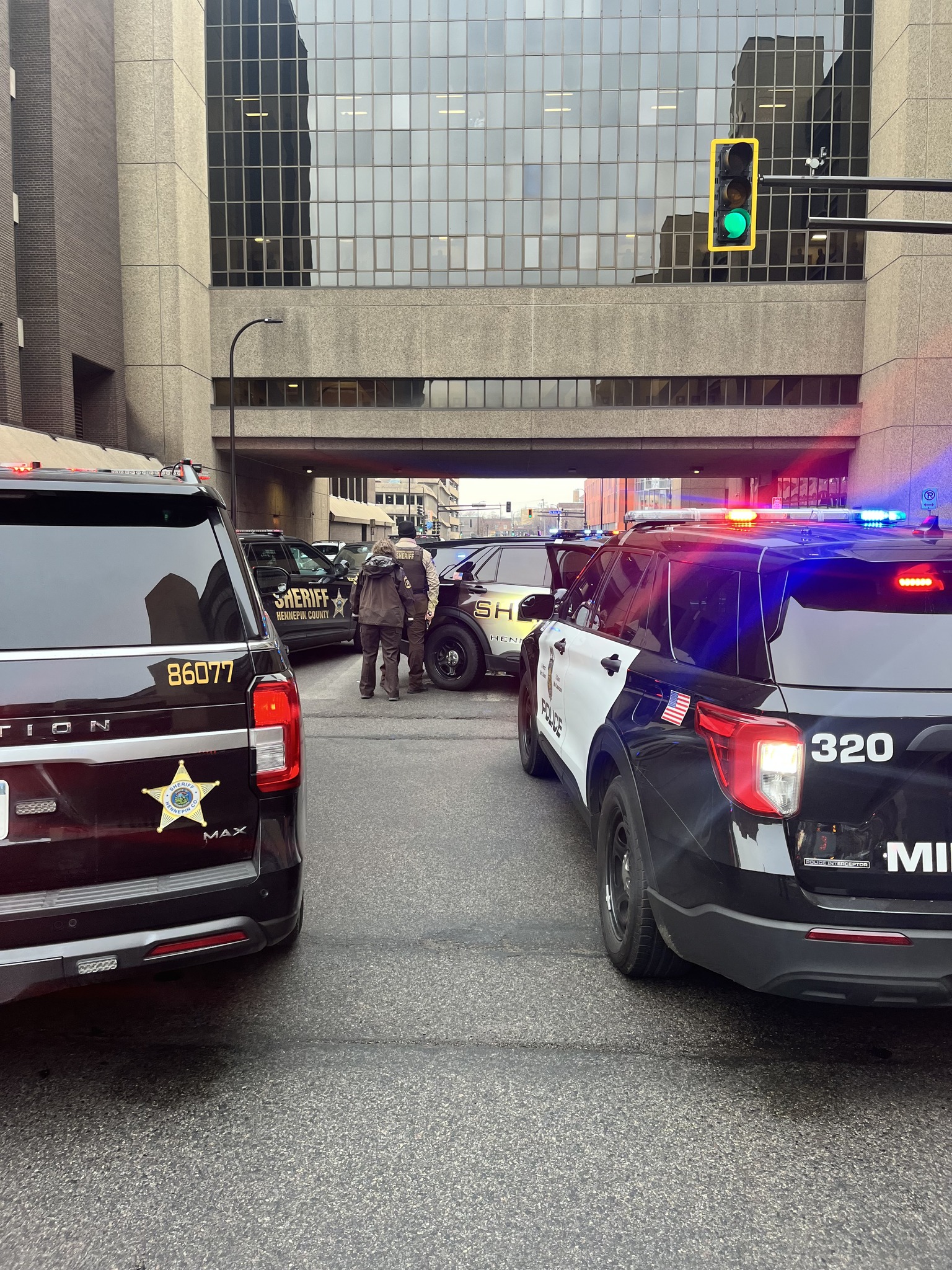
Minneapolis — A tense mental health crisis unfolded Thursday morning outside Hennepin Healthcare, where deputies and crisis negotiators worked for hours to safely intervene and ensure a person in distress received medical care.
According to the Hennepin County Sheriff’s Office, deputies assigned to the hospital responded to reports of a person in crisis inside a vehicle that was blocking traffic near the facility. When deputies approached, they observed the individual actively harming themself by cutting their head with multiple knives.
Crisis negotiators with the sheriff’s office arrived within minutes and began speaking with the individual in an effort to de-escalate the situation and persuade them to put down the weapons and accept help.
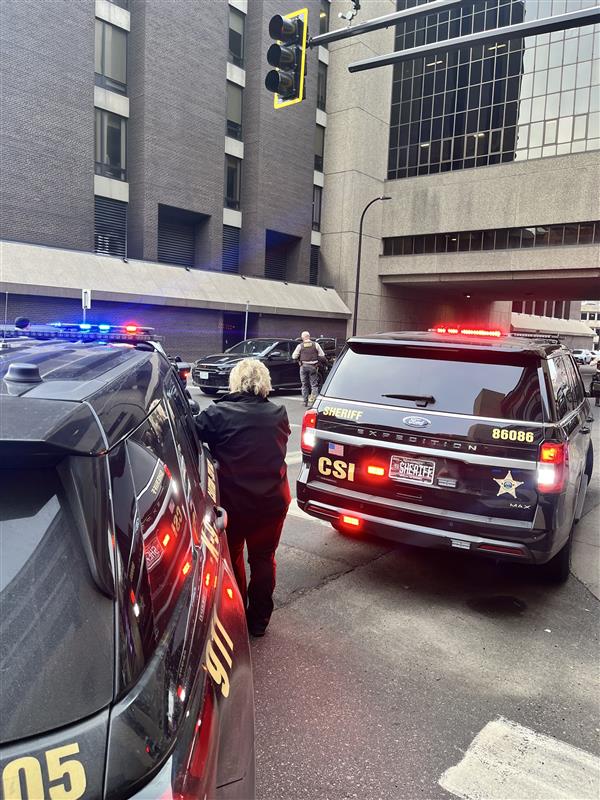
The incident prompted authorities to close nearby streets, including Chicago Avenue and 6th Street, to secure the area. At one point, part of the hospital’s emergency room was also placed on lockdown as a precaution while the situation unfolded.
For approximately two hours, negotiators maintained communication with the individual, who appeared to respond to their efforts to encourage them to exit the vehicle and seek assistance.
However, officials said the situation escalated suddenly when the person began cutting their own throat. Deputies then deployed less-lethal munitions to break the vehicle’s windows, allowing them to quickly gain access and intervene to prevent further injury.
The individual was taken into the hospital and is currently receiving medical care.
During the response, a crowd of roughly 20 to 30 people gathered nearby. Authorities said some members of the crowd shouted obscenities toward deputies, increasing tensions despite officers explaining the circumstances of the situation.
Officials noted that in incidents involving individuals experiencing an active mental health crisis, even minor disturbances can heighten the risk and complicate efforts to safely de-escalate the situation.
Authorities also acknowledged that emotions remain heightened in the community following Operation Metro Surge, but emphasized that law enforcement officers continue to respond to challenging situations that require patience, coordination, and care.
The sheriff’s office expressed appreciation for the agencies that assisted at the scene, including the Minneapolis Police Department, Minneapolis Behavioral Crisis Team, and Hennepin Healthcare paramedics for all of their work bringing this incident to a safe ending and providing on scene support and medical aid. HCSO crisis negotiators are highly trained professionals skilled in communicating with people who are experiencing a mental health crisis. They also respond to barricaded subjects, hostage situations, and other high-risk incidents involving weapons, working patiently and strategically to bring situations to a safe resolution.

Hennepin County is inviting community organizations, service providers, and residents to partner in strengthening violence prevention efforts across the county.
To support collaboration, the county will host both in-person and virtual information sessions. These gatherings will give potential partners the opportunity to ask questions, share feedback, and help shape how this important work moves forward together.
Building Safer, Stronger Communities
Over the past several years, violence prevention staff within Hennepin County’s Safe Communities area have worked closely with community-based providers in neighborhoods most impacted by violence. Their shared goal is to increase safety and ensure residents have access to:
- Basic needs and essential resources
- Meaningful employment opportunities
- Safe spaces to grow and learn
- Psychological support and a sense of being valued
- Freedom from fear
- Pride and belonging in their communities
Through collaboration, the county and its partners aim to create protective environments for young people, connect them with caring adults and positive activities, and promote healthy families.
“Violence prevention is a collective effort,” said Ifrah Jama, violence prevention coordinator for Hennepin County. “Every young person has the potential to choose peace over violence. We can support and guide them in recognizing the strength of compassion and understanding. Empowering our youth to become leaders in peacebuilding is at the heart of our violence prevention effort. They are the change-makers of tomorrow.”
Get Involved
As the county prepares to seek proposals for 2027 programming, community members are encouraged to attend upcoming virtual feedback sessions to learn more and share input.
Virtual Gathering:
Tuesday, March 10
1 p.m.
Learn more: Community violence prevention request for proposals
Organizations and residents who are committed to creating safer neighborhoods and expanding opportunity for youth are strongly encouraged to participate.
Together, we can build communities where every young person feels safe, supported, and empowered to thrive.
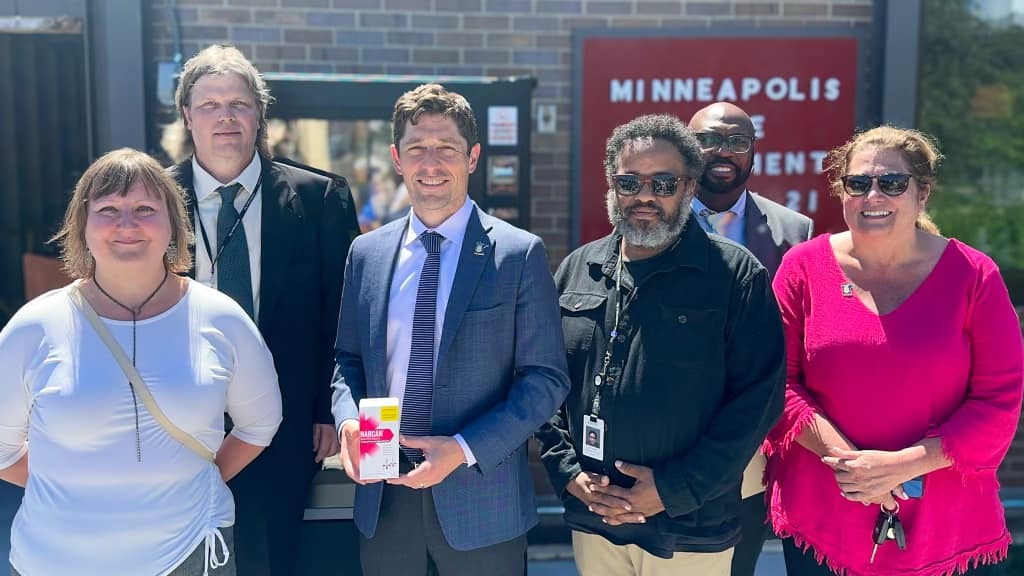
Minneapolis – In a groundbreaking effort to expand access to life-saving overdose intervention tools, the Minneapolis Health Department, in partnership with Hennepin County, has installed the first NARCAN vending machine in North Minneapolis. The machine is located at Fire Station 14, which also operates as the City’s Safe Station—a trusted and welcoming space for individuals seeking help with substance use and recovery.
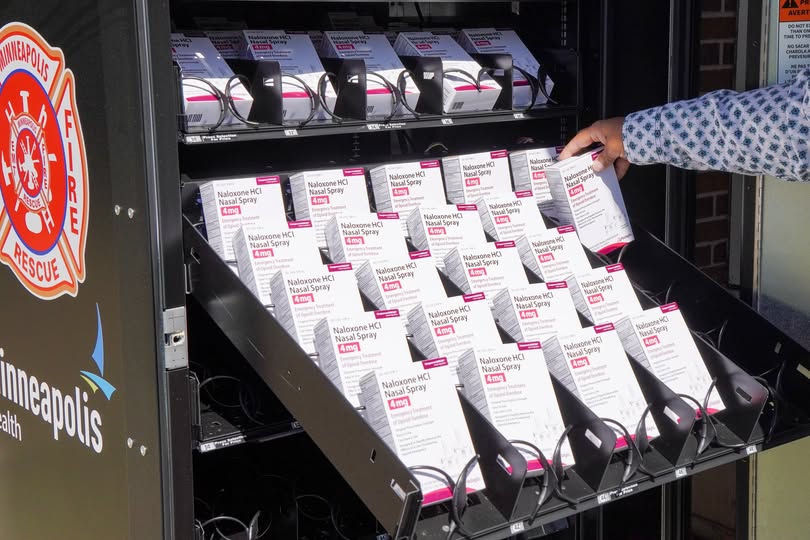
The vending machine is stocked with more than 100 boxes of NARCAN, with each box containing two doses of the opioid overdose reversal medication. It is accessible 24/7 and available at no cost—no ID, insurance, or appointments required.
Fire Station 14 serves as more than just an emergency response hub—it’s a point of connection. Those who walk through its doors can access peer recovery specialists and a network of support services aimed at helping people take the next step in their recovery journey.
Support is here, and it’s closer than you think. By putting tools like NARCAN directly into the hands of community members, Minneapolis is taking a vital step toward building healthier, more resilient neighborhoods.
Watch the announcement: https://www.youtube.com/live/K6HeebdcXL0
Find resources: https://www.minneapolismn.gov/…/current-concerns/opioids/


Health officials are urging people to contact their health care provider if they ate a hamburger, especially if undercooked, at a table-service restaurant since Oct. 31 and then developed diarrhea, particularly bloody diarrhea, in the following week.
The Minnesota Department of Health (MDH) has identified 10 cases of E. coli O157 infection in people who had eaten burgers at multiple locations of Red Cow, a table-service restaurant chain with locations in Hennepin, Ramsey and Olmsted counties. One additional case reported dining at Hen House Eatery in Minneapolis, which received the same ground beef product suspected in this investigation. The ground beef product was also distributed to other establishments, so additional cases from other locations could be identified.
So far, cases have reported meal dates of Oct. 31 through Nov. 7, and illness onset dates range from Nov. 4 through Nov. 9. Cases range in age from 9 to 70 years. Two cases have been hospitalized. Additional potential cases are under investigation.
Red Cow and Hen House Eatery owners are fully cooperating with the investigation and have made multiple changes, including product changes, to prevent further illnesses. MDH is working with the Minnesota Department of Agriculture and multiple local environmental health agencies during this ongoing investigation.
Symptoms of illness caused by E. coli O157 typically include stomach cramps and diarrhea, often with bloody stools, but only a low-grade or no fever. People typically become ill two to five days after exposure, but this period can range from one to eight days. Most people recover in five to 10 days. However, about 5% of E. coli O157 infections lead to hemolytic uremic syndrome (HUS), a severe complication that involves acute kidney failure and other severe problems. Treatment with fluids can help prevent HUS, but E. coli O157 gastroenteritis should not be treated with antibiotics, which can increase the likelihood of HUS.
Anyone who believes they may have developed an E. coli O157 infection should contact their health care provider.
Approximately 100 cases of E. coli O157 infection are reported each year in Minnesota. More information on E. coli O157 and how to prevent it can be found on the MDH E. coli website.
-MDH-

Garsoore si ku meel gaar ah hakad u geliyay sharcigii maanta hirgeli lahaa ee saameynayey Soomaalida haysta TPS-ka

Darawalada Gawaarida Xamuulka Qaada oo tiro ahaan dhan 200,000 ayaa waayaya shatiga ay baabuurta ku wadaan

Walaac ka dhasay maxkamadaha socdaalka Maraykanka oo dedejinaya kiisaska Soomaalida, qaarkoodna si qarsoodi ah loo qabanayo

Soomaali sharciga TPS-ka haysta oo dacwad ka gudbiyay maamulka Trump

Ramsey County offers temporary property tax relief to help people affected by Operation Metro Surge

Somali American Bar Association Launches Community Rights Education Video

6 Ways to protect yourself from COVID-19 / Corona virus disease – WHO

Aadaankii u horeeyay: Habeen Taariikhi ah

What You Need to Know to Prevent & Manage COVID-19 (w/English subtitles)
-

 Local News8 months ago
From First to Forefront: Omar Fateh’s DFL Endorsement for Minneapolis Mayor Marks a 25-Year Somali American Political Journey
-

 Community Resource8 months ago
Khadka Caawinta Qaxootiga iyo Soo Galootiga: Wac maanta si aad u hesho macluumaad iyo ilo xogo
-

 Local News11 months ago
Lake Street Lift Launches “Lake of 10,000 Lands” Campaign
-

 Local News12 months ago
Councilmember Osman’s Statement on Violence Interrupter Services in Cedar Riverside and Elliot Park
-

 Local News3 weeks ago
Qof ku dhintay shil ka dhashay baabuur la xaday oo booliiska ka cararay
-
 Health10 months ago
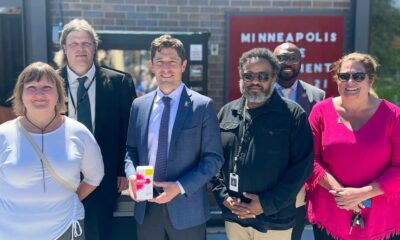
City of Minneapolis Launches First NARCAN Vending Machine on the Northside
-

 Local News10 months ago
Minneapolis Vows to Advance Police Reforms Despite DOJ Move to Dismiss Consent Decree
-

 Local News10 months ago
More than 6,000 drivers cited for prioritizing phones over safety during distracted driving enforcement campaign